
Call us now :07313726225
 Send Inquiry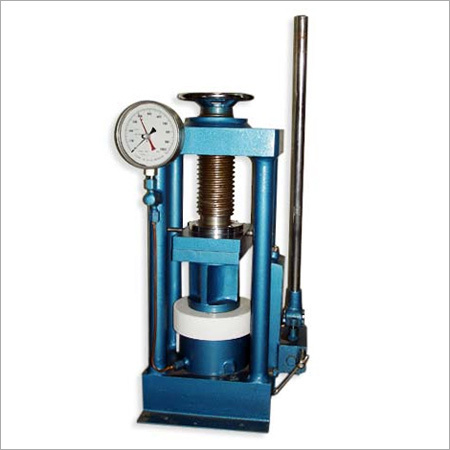
Compression Testing Machine - Hand Operated Pillar type
Product Details:
- Automation Grade Manual
- Response Time Immediate (manual reading)
- Interface Type Manual adjustment and reading
- Display Type Analog dial gauge
- Features Pillar type sturdy construction, hand wheel operation, analog dial indication, overload protection
- Mounting Type Floor standing
- Application Cement, concrete, bricks, tiles, and other materials compressive strength testing
- Click to View more
X
Compression Testing Machine - Hand Operated Pillar type Product Specifications
- Manual (Hand operated)
- 1 at a time
- Up to 85% RH (non-condensing)
- Compression Testing Machine - Hand Operated Pillar Type
- 5C to 40C operating range
- Up to 200 mm
- N/A (manual operation)
- Approx. 250 kg
- N/A (no ports required)
- Cement, concrete, bricks, tiles, and other materials compressive strength testing
- Analog dial gauge
- Pillar type sturdy construction, hand wheel operation, analog dial indication, overload protection
- 150 mm (approx)
- Floor standing
- Manual adjustment and reading
- Immediate (manual reading)
- Laboratory/field testing
- Manual
- 0.1 kN
- 1000 kN (standard options: 100 kN/200 kN/500 kN/1000 kN)
- N/A (not applicable)
- Robust hardened steel platens
- 1% of indicated load
- N/A (manual operation)
- Up to 150 mm cubes or cylinders up to 300 mm height
- 0-1000 kN
- Approx. 1100 mm
- Not required (manual operation)
- Hand operated mechanical
- 0-1000 kN (depending on model)
- IS 516, BS 1881, ASTM C39
- Overload safety valve
- Anti-corrosive enamel paint
- Pillar type, heavy duty MS fabrication
- Approx. 10 liters (hydraulic ram)
- 150 mm diameter
- Set of spacers, calibration certificate, hand wheel
- Hydraulic analog pressure gauge
- Manual with screw-driven load application
- Easy maintenance with accessible parts
Product Description
Specification
| Country of Origin | Made in India |
| Power | Hydraulic |
| Material | M.S. |
| Grade | NA |
| Automation Grade | Manual |
| Motor Power | HAND OPERATED |
| Voltage | NA |
| Capacity | 1000 Kn |
| Packaging Type | Wooden |
| Model Name/Number | FOUR PILLAR TYPE |
Durable Pillar-Type Design
The machine's pillar-type construction uses heavy-duty MS fabrication, ensuring outstanding stability and longevity under demanding test conditions. The anti-corrosive enamel finish adds further protection, making the instrument suitable for both laboratory and field environments. Its floor-standing design and robust structure support consistent and accurate compressive strength measurements for a variety of materials.
Versatile Testing Capability
Specifically designed for manual operation, the equipment tests compressive strength on cement, concrete, bricks, and tiles. The machine accepts specimen sizes up to 150 mm cubes or 300 mm cylinders, providing a test width of 150 mm. Its flexibility caters to a range of civil engineering applications while maintaining high accuracy (1%) and immediate response time with an analog dial gauge display.
Reliable Manual Operation
No external power is required to operate this compression testing machine. Manual load application via a screw-driven mechanism and hand wheel allows precise control during tests. Hydraulic pressure application and overload safety features ensure user safety and protect the machine during heavy-duty or prolonged usage. Accessible parts simplify routine maintenance, guaranteeing longevity and optimal performance.
FAQ's of Compression Testing Machine - Hand Operated Pillar type:
Q: How does the hand-operated compression testing machine apply load during testing?
A: The machine uses a manual screw-driven mechanism operated with a hand wheel to precisely apply compressive load. Hydraulic force is generated and measured by an analog pressure gauge, enabling accurate, controlled testing without needing electricity.Q: What types and sizes of specimens can be tested with this machine?
A: The equipment is suitable for testing cement, concrete, bricks, tiles, and similar materials. It accommodates specimens up to 150 mm cubes or cylinders with heights up to 300 mm, following standard testing guidelines.Q: Where is this compression testing machine ideally used?
A: This machine finds utility both in laboratories and onsite field settings, offering flexibility for material strength testing across construction projects, research facilities, and quality control laboratories.Q: When should maintenance be performed on the machine and what does it involve?
A: Routine maintenance ensures optimal performance. Accessible parts allow for easy cleaning, lubrication, and inspection. It's advisable to conduct maintenance after frequent use and before intense testing schedules, especially on hydraulic and mechanical components.Q: What safety features are provided during operation?
A: The machine includes an overload safety valve to protect both the user and equipment from excessive loading. The sturdy pillar construction and anti-corrosive finish further enhance operational safety and machine durability.Q: What are the benefits of choosing a hand-operated model over automatic alternatives?
A: The manual operation allows use without electricity, offering greater portability and cost efficiency. Immediate analog gauge response and manual control provide real-time feedback and flexibility for various testing environments.Q: How does compliance with IS 516, BS 1881, and ASTM C39 standards benefit the user?
A: Adhering to these internationally recognized standards ensures reliable, repeatable test results and supports acceptance in formal reporting for engineering and quality assurance purposes.Tell us about your requirement

Price:
Quantity
Select Unit
- 50
- 100
- 200
- 250
- 500
- 1000+
Additional detail
Mobile number
Email

Other Products in 'Concrete Testing Equipments' category


Our Products
- Concrete Testing Equipments
- Surveying Equipment
- Cement Testing Equipment
- Soil Testing Instruments
- Aggregate Testing Equipments
- Bitumen Asphalt Testing Equipments
- Pipe & Cable Locator Instruments
- Coating & Paint Testing Equipment
- NDT Testing Instruments
- Single-Multi Gas Detactor Equipment
- Vehicle Tracking Device GPS
- Air Entrainment Meter
- Cone Penetrometer
- Cylindrical Metal Measure
- Cube Mould
- Curing Compound Mould
- Flakiness Gauge
- Elongation Gauge
- Ball Mill
- Gauging Trowel
- NDT James Manual Rebound Hammer
- Gyratory Sieve Shaker
- Coarse Sieves
- Electrically Operated Bitumen Extractor
- Hand Operated Bitumen Extractor
- Cement Autoclave
- Holiday Detector
- Bitumen Penetrometer
- Aggregate Impact Value Testing Machine
- Land Surveying Instruments
- Coating Inspection Instruments
- Safety Equipment
- Welding Inspection Instruments
- Speed Gun
- Electronic Weighing Scales
- Non Distructive Testing Equipment
- Measuring Instruments
- Cable Locator
- Gps Vehicle Tracking
- Fuel Gas Analyzer
- Cube Testing Machine
- Thickness Gauge
- Water Testing Instrument
- Infrared Forehead Thermometer
- Corrosion Testing Equipment
- Gps Car Tracking
- Density Basket
- Surface Profile Gauge
- Standard Sand
- Core Cutting Machine
- Vibratory Motor
- Mortar Mixer
- Laboratory Bottle
- Laboratory Oven
- Pan Mixer
- Core Drilling Machine
- Coating Thickness Gauge
- Distance Meter

A-4, PRIME ESTATE - 2, NR. SUNRISE HOTEL & GOKUL COMPLEX, UJALA CIRCLE, SARKHEJ,Ahmedabad - 382210, Gujarat, India

Mr Alpesh
(Proprietor)
Mobile :07313726225
 Send Inquiry
 Send SMS
Developed and Managed by Infocom Network Private Limited.
